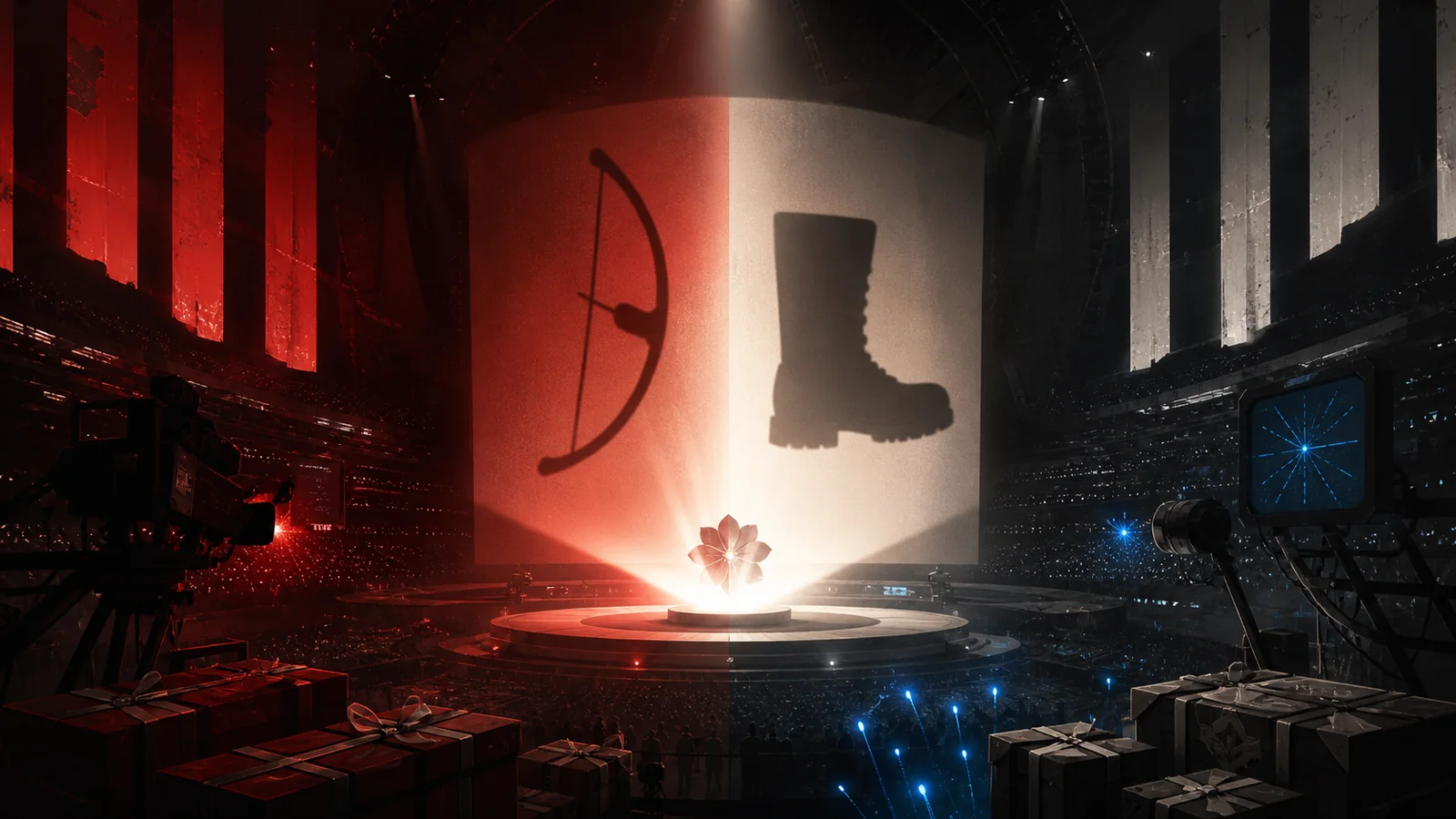
This article discusses the full original Hunger Games trilogy and Dungeon Crawler Carl through Book 8. It analyzes young characters in The Hunger Games at the level of politics, media, and survival strategy without graphic depiction. Katniss Everdeen and Carl are not chosen because they want to lead rebellions. They become dangerous because systems built on spectacle accidentally teach audiences how to see them as symbols. That is the central connection between The Hunger Games and Dungeon Crawler Carl. Both worlds transform suffering into entertainment. Both use sponsors to turn audience approval into material survival. Both rely on hosts, costumes, interviews, public narratives, and controlled storytelling to make violence politically useful. Both discover that a contestant can become more powerful as a symbol than as a fighter. And both eventually confront the problem that rebellion itself can become another form of performance. Scholastic's original description of The Hunger Games presents Panem as a stratified society where the Capitol forces each district to send one boy and one girl between ages twelve and eighteen into a survival contest on live television. Katniss, sixteen, volunteers in place of Prim and enters a system that expects her to become consumable entertainment. The sequel Catching Fire makes the political consequence explicit: Katniss and Peeta's victory is interpreted as defiance, rumors of rebellion spread, and the pair become faces of a movement they did not intentionally create. DCC begins with adults rather than child tributes, but the spectacle machinery is recognizably similar. Carl and Princess Donut enter Dungeon Crawler World after Earth is destroyed. Their progress is watched by a galactic audience. Popularity produces followers, favorites, fan boxes, sponsor attention, and political visibility. Interviews and public appearances become part of survival. Their party name becomes a brand. The brand becomes a community. The Princess Posse eventually becomes an army. The important shared pattern is this: The regime creates the celebrity. The celebrity becomes a language the regime can no longer fully control. Original non-canon editorial crossover artwork. It is not official Scholastic, Lionsgate, or DCC art and should not be treated as a depiction of teenage actors or official character designs. Katniss does not volunteer because she wants political influence. She volunteers to save Prim. Carl does not enter the dungeon because he wants to represent humanity. He enters because the world has ended and he needs to survive with Donut. That narrow personal motivation becomes politically explosive in both stories. The regimes expect contestants to care about themselves. The audience becomes moved when contestants demonstrate loyalty that exceeds self-preservation. Katniss's volunteerism, protection of Rue, alliance with Peeta, and refusal to behave like a cleanly scripted victor make her legible as resistance. Carl repeatedly risks himself for Donut, Katia, Meadow Lark crawlers, NPCs, strangers, and later entire communities. The dungeon wants an entertaining antihero. The audience sees someone who keeps refusing the System's moral arithmetic. Neither symbol is manufactured entirely from above. Both are created through a conflict between public performance and private motive. The Capitol does not simply want the Games to happen. The comparison connects directly to Audience Economy and Crawler Risk, Sponsorship, and Faction Wars. It wants the Games to mean something. The spectacle is supposed to communicate:
- the Capitol controls the districts
- resistance is futile
- children can be taken
- survival depends on pleasing the center
- victory is a gift from the regime
DCC's operators also need meaning. Borant needs the crawl to be entertaining. Crawler shows need recognizable storylines. Sponsors need brand association. The audience needs heroes, villains, rivalries, pets, romances, grudges, and recurring identities. Carl and Donut are useful because they are narratively legible. The Royal Court of Princess Donut is a perfect broadcast product. The problem for every propaganda system is that a symbol can be interpreted differently from the intended script. The Mockingjay is powerful because the symbol escapes original ownership. Katniss's actions are seen by people across Panem in ways the Capitol cannot fully contain. A dress can become political. A gesture can become political. A song can become political. A romance narrative can become political. The regime still controls the camera and loses control of the meaning. Carl's public trajectory works similarly. The dungeon broadcasts him because controversy is profitable. Every anti-authority moment becomes content. But the content also shows viewers the system's cruelty. Carl's refusal to cooperate becomes part of his marketability, which gives the rebellion more reach. The show sells the person who is teaching people to hate the show. That contradiction is one of DCC's central political engines. The Donut/Peeta comparison is useful only if handled carefully. Peeta is not "the Donut of The Hunger Games," and Donut is not a romantic analogue for Peeta. Their similarity is functional. Both understand that public presentation can become a survival skill. Peeta is unusually effective at interviews, emotional framing, and giving the audience a story it can hold onto. Donut also understands performance instinctively. She tells Carl that interviews are her territory because her pre-dungeon life in cat shows trained her to be judged in public. Both can take an authentic relationship and present it in a form the audience understands. That skill protects the more reluctant symbol beside them. Katniss is often uncomfortable with performance. Carl is often openly hostile to it. Peeta and Donut are better at recognizing that refusing performance completely means surrendering a tool to the regime. One of the strongest ideas in The Hunger Games is that authentic emotion and strategic performance do not have to be opposites. Peeta can care about Katniss and understand that the love story affects sponsor interest. Katniss can perform for survival and later discover that some feelings cannot be cleanly separated from the performance. DCC uses the same ambiguity in a non-romantic relationship. Donut genuinely loves attention. She also genuinely loves Carl. Her princess persona is theatrical. Her leadership is real. The Royal Court is a joke. The Royal Court becomes a recognizable identity. The Princess Posse is branding. The Princess Posse becomes a real coalition. Performance is not automatically false. Sometimes performance is the social form through which a real relationship becomes politically visible. Original non-canon editorial artwork. Sponsors matter in both worlds because they turn popularity into material survival. In the Hunger Games, sponsor gifts can provide resources inside the arena. Tribute presentation, training scores, interviews, attractiveness, narrative framing, and mentor strategy can influence the support available. In DCC, the system is more quantified. Views become followers. Followers become favorites. Organizations become patrons and sponsors. Sponsors can purchase boxes. Fan boxes can be influenced by audience voting. Benefactor support can deliver unusually powerful items. The mechanic is larger, but the political problem is the same: survival resources are distributed partly according to entertainment value. This makes public appeal a stat even when the interface does not call it one. Neither protagonist likes the idea that their value to an audience should determine whether they live. But refusing the system entirely can hurt the people they are trying to protect. Katniss must participate in interviews, costumes, sponsor strategy, and a public relationship narrative. Carl must appear on shows, manage public attention, accept sponsor systems, and tolerate being turned into content. The difference is that Donut is much more comfortable operating in that environment than Carl. She turns media competence into party capability. Original non-canon editorial artwork. The audience does more than provide entertainment value. It decides which suffering becomes visible. A tribute who is memorable gets sponsor attention. A crawler who becomes popular gets resources, media invitations, and political visibility. The regime can therefore create a system where the contestants themselves compete for public legibility. That is politically useful. Instead of asking why the Games or crawl exists, the audience can debate which contestant deserves support. The structure disappears behind personality. Both Katniss and Carl become dangerous when their personalities point attention back at the structure. The Hunger Games uses physical presentation intensely. Costumes, styling, staging, interviews, and controlled images tell the audience how to interpret a tribute. DCC uses an additional thread: the game build. Race. Class. Equipment. Pets. Titles. Achievements. A crawler's mechanical identity becomes part of the public brand. Carl's appearance and class choices become media material. Donut's magical abilities and princess identity reinforce her public persona. The contestant becomes a package of image and capability. Peeta's greatest contribution is often described as charm. That understates it. He understands narrative. He recognizes that the audience needs a story and that controlling the story can create space for survival. That makes him one of the most politically sophisticated people in the original trilogy before he ever becomes a formal rebel figure. Donut has a similar instinct in DCC. She may care about status and presentation for personal reasons, but those instincts become strategic. She understands rooms, reactions, insults, timing, and public identity. Carl can blow a wall open. Donut can change what the audience thinks the explosion means. The Capitol wants Katniss to become a role it can control. The rebellion also wants a usable Mockingjay. That is one of the trilogy's most important complications. Opposing institutions can still exploit a person symbolically. DCC increasingly gives Carl the same problem. Borant wants a star. Sponsors want association. The Cookbook network wants resistance. The Princess Posse needs leadership. NPCs need allies. Viewers need a symbol. Even people on Carl's side can need him to be something he did not personally choose. Rebellion does not automatically eliminate instrumentalization. Original non-canon editorial artwork. The original trilogy becomes more politically mature when it shows the rebel side producing its own propaganda. Katniss becomes the subject of propos. Her authenticity is treated as a resource. The rebellion understands that emotion can mobilize populations. DCC has not reproduced the exact same media structure, but it repeatedly moves toward the same problem. The Princess Posse becomes a public political brand. The Cookbook authors use journalism, public declarations, and resistance messaging. Open Intellect factions operate in the public sphere. Carl and Donut's media reach becomes useful to anti-crawl politics. The ethical question becomes: Can you use the tools of spectacle without becoming another institution that turns people into content? Panem uses food, wealth, district inequality, and access to safety as political tools. Dungeon Crawler World uses loot, healing, safe rooms, sponsor resources, class options, information, and deals. Scarcity makes compliance rational. A tribute needs sponsor help. A crawler needs equipment. A starving district may fear rebellion. A wounded crawler may accept a contract. The system creates conditions where people can be blamed for making choices the system engineered. Katniss's alliance with Rue creates meaning the Capitol does not want. The relationship crosses district boundaries. It allows grief to become political. DCC repeatedly shows the same danger in broader coalition form. Carl and Donut ally with Meadow Lark. Crawler parties share information. The Princess Posse incorporates survivors from many backgrounds. Team Retribution joins crawlers and awakened NPCs. A spectacle system wants individual competitors. Cross-group solidarity creates a different political imagination. The district structure keeps people separated. The Games reinforce the separation by forcing district representatives to compete. The Capitol needs people to identify downward and locally rather than horizontally with other oppressed districts. Dungeon Crawler World also benefits when crawlers treat each other as rivals. Leaderboards. Achievements. Player-killing rewards. Audience competition. Floor mechanics. Faction structures. All can encourage division. Carl's coalition becomes dangerous because it creates shared identity across those designed boundaries. The comparison between Mockingjay symbolism and the Princess Posse is stronger than a simple "both are rebellion brands" observation. Both begin with something emotionally legible and become larger than the person at the center. Katniss cannot personally control every meaning attached to the Mockingjay. Donut does not individually control every person who identifies with the Princess Posse. Symbols become political infrastructure. That is useful and dangerous. A movement that depends too heavily on one symbol becomes vulnerable when the person changes, fails, disappears, or rejects the role. Katniss's anger is rooted in protection, grief, and the experience of being used by both Capitol and rebellion. Carl's anger begins with the destruction of Earth and grows through repeated exposure to the industrialized cruelty of the crawl. Katniss often resists being turned into a strategist. Carl increasingly becomes one. By Faction Wars, he is planning operations across an army. The shared trait is that neither begins by wanting command. The difference is that Carl becomes more willing to use the system's own mechanisms as weapons. Peeta's public power comes through empathy, narrative control, and emotional legibility. Donut's comes through charisma, status, humor, outrage, and performance instinct. Peeta often softens the public image around Katniss. Donut often makes Carl's image bigger, stranger, and more memorable. Both expand what the reluctant protagonist can communicate to an audience. Neither is merely accessory to the central symbol. The Capitol depends on controlling the official story. Once rebel media can reach people, the meaning of images changes. DCC's situation is even stranger because the crawl itself broadcasts Carl's resistance. The entertainment platform is forced to carry content that undermines the institution. The better Carl performs as a dissident, the more valuable he becomes as entertainment. That is a propaganda trap with no exact Hunger Games equivalent, but the underlying contradiction is familiar.
| Theme | The Hunger Games | Dungeon Crawler Carl |
|---|---|---|
| Reluctant symbol | Katniss | Carl, increasingly Carl and Donut together |
| Public-facing partner | Peeta | Donut, in a non-romantic dual-lead role |
| Sponsor system | Gifts based on presentation and mentor strategy | Boxes, patrons, fan voting, commercial sponsors |
| Regime narrative | Capitol supremacy and district submission | Crawl legitimacy, entertainment, Syndicate/Borant order |
| Rebellion narrative | Mockingjay and propos | Princess Posse, Cookbook network, anti-crawl messaging |
| Public performance | Costumes, interviews, romance narrative | Shows, interviews, achievements, branding, class/build identity |
| Arena | Hunger Games arena | Dungeon floors |
| Audience role | Capitol citizens and national broadcast | Galactic viewers, followers, favorites, sponsors |
| Key political risk | Symbol used by both sides | Crawler becomes media asset for allies and enemies |
| End-state problem | Replace authoritarian regime without reproducing it | Break exploitation architecture without reproducing its logic |
Neither regime collapses because the protagonist announces a perfect ideology. Rebellion begins when other people look at an event and interpret it differently from the official script. Katniss's defiance becomes evidence that the Capitol can be resisted. Carl's survival and refusal become evidence that the crawl can be exploited and opposed. The symbol becomes politically powerful before the symbol-holder fully understands the movement. That is why both protagonists are reluctant. They do not decide to become icons. Other people decide the icon means something. The Hunger Games sponsor economy matters, but DCC systematizes audience interaction far more aggressively. Followers can vote on fan boxes. Sponsors purchase benefactor support. Views and favorites are visible metrics. Crawler media is an industry. The audience is not merely watching propaganda. It is participating in progression. This makes DCC's critique closer to platform economics than state television alone. The audience can care about Carl and still be economically useful to the system hurting him. The Hunger Games and Dungeon Crawler Carl are both stories about regimes that believe spectacle makes power look inevitable. Katniss and Carl expose the flaw. Spectacle also creates witnesses. The camera can humiliate a contestant. It can also show the audience that the contestant refused. A sponsor gift can make a tribute dependent on public approval. It can also keep a rebel symbol alive. A public persona can be imposed. It can also become a language for solidarity. The regime wants a star. The rebellion discovers a symbol. The person trapped between those roles still has to survive being both. Yes in their reluctance to become symbols and their protective motivations. Carl becomes more deliberately systems-focused and technically revolutionary over time. Only in the limited sense that both are highly effective public-facing partners. Donut is Carl's non-romantic dual protagonist with independent leadership and combat power. Both convert audience approval and presentation into survival resources. DCC formalizes the process through metrics, fan boxes, patrons, and commercial sponsorship. DCC expands the spectacle from authoritarian state television into a galactic platform economy with interactive audiences, AI, gods, corporations, and political factions. Because the regimes themselves are built on controlling public interpretation. Resistance needs a way to make the same images mean something different.